


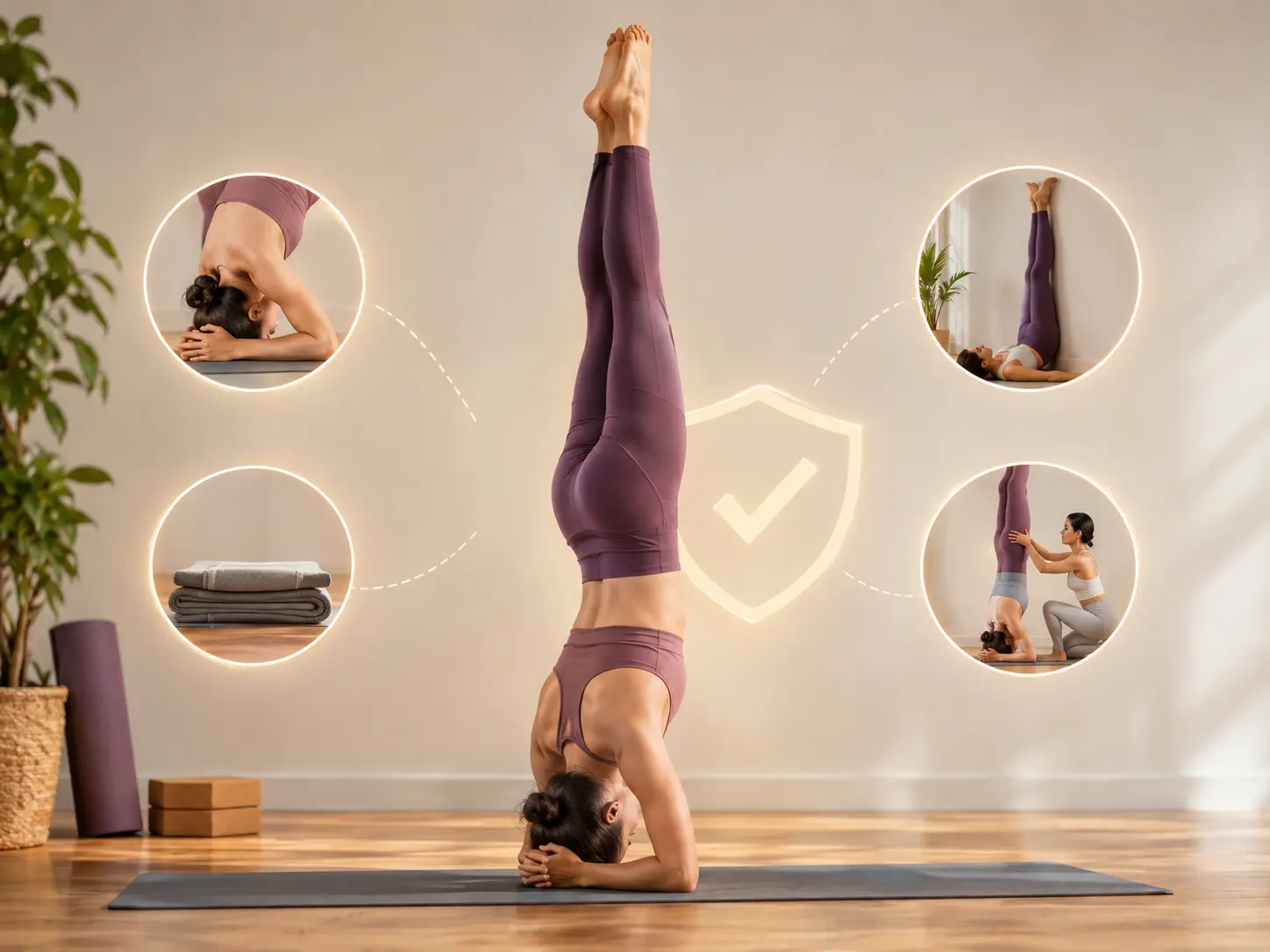

How to Practice Inversions Safely and Effectively?
Inversions are some of the most fascinating and visually striking poses in yoga. Going upside down challenges your strength and balance and helps shift your perspective - both physically and mentally. However, inversions can seem intimidating, especially for beginners. With the proper preparation, mindset, and guidance, they can become an integral and rewarding part of your yoga practice.
Whether you're dreaming of nailing your first headstand (Sirsasana) or exploring more advanced poses like handstands (Adho Mukha Vrksasana) or forearm balances (Pincha Mayurasana), this guide will cover everything you need to know before venturing into the world of inversions.
What Are Yoga Inversions?
Inversions are poses where your heart is elevated above your head. This could range from accessible poses like Downward-facing Dog (Adho Mukha Svanasana) to advanced balances like the Handstand. Inversions are known for their numerous benefits: they improve circulation, build core and upper body strength, and bring a sense of calm and clarity to the mind.
Benefits of Practicing Inversions
- Improved Circulation: Being upside down helps redirect blood flow toward the brain, providing oxygen and nutrients. This increase in circulation enhances focus, boosts mental clarity, and can even help with skin health. Over time, practising inversions can improve overall cardiovascular efficiency.
- Enhanced Strength: Inversions demand significant engagement of the core, arms, shoulders, and back muscles to maintain balance and control. They build functional strength that supports everyday movements and other yoga poses. The progressive nature of inversions means you can develop strength step by step, avoiding strain.
- Balance and Coordination: Practicing inversions sharpens proprioception - your sense of body awareness in space. This translates to improved balance, not only in yoga poses but in your daily activities. The coordination required for inversions also helps refine your motor skills.
- Stress Relief: Inversions activate the parasympathetic nervous system by reversing gravity’s effect on your body, encouraging relaxation and stress reduction. They can help release tension from the neck and shoulders, where stress often accumulates. Regular practice can lead to a calmer, more centered mind.
- Fresh Perspective: Flipping upside down provides a literal shift in perspective, encouraging mental flexibility and creativity. It can help you approach challenges in life with renewed optimism and openness, encouraging personal growth both on and off the mat.
Safety First: Why Guidance Matters
Inversions are exciting but require careful preparation and practice. Attempting them without proper knowledge or supervision can lead to injuries, including strain in the neck, shoulders, and lower back. Practicing under the guidance of experienced teachers in live classes ensures you learn proper alignment, build strength progressively, and avoid mistakes.
Preparing for Inversions
1. Build Your Foundation:
Ensure your foundational poses are strong before diving into inversions. Focus on these key areas such as:
- Core Strength: A strong core acts as your center of gravity and helps maintain stability during inversions. Incorporate poses like Plank (Phalakasana), Boat (Navasana), and Forearm Plank into your practice. Over time, these poses will also improve your endurance and control.
- Shoulder Stability: Shoulders bear a significant amount of weight in inversions. Strengthen them with poses like Dolphin (Ardha Pincha Mayurasana) and Chaturanga Dandasana to avoid injury and build the necessary support. Pay attention to shoulder alignment and avoid hunching.
- Flexibility: Tight hamstrings or shoulders can hinder your inversion practice. Open up these areas with poses like Forward Fold (Uttanasana) and Puppy Pose (Uttana Shishosana). Regular stretching helps create the mobility required for safe and effective inversions.
2. Understand the Mechanics:
Learn the proper alignment and mechanics of inversions from your teacher. Each pose requires precise engagement of muscles, alignment of joints, and distribution of weight to avoid unnecessary strain. Practicing the mechanics step by step reduces overwhelm and builds confidence.
3. Warm Up Properly:
Ensure your body is warmed up before attempting inversions. Focus on mobilizing your wrists, shoulders, and spine to reduce the risk of injury. A thorough warm-up improves circulation and prepares your body for the demands of weight-bearing poses.
Beginner-Friendly Inversions to Start With
If you're new to inversions, start with these accessible poses:
1. Downward-facing Dog (Adho Mukha Svanasana)
- While not a "full" inversion, this pose introduces you to the sensation of having your head below your heart.
- Focus on grounding through your hands and elongating your spine. Keep the core engaged and distribute weight evenly between hands and feet.
2. Legs Up the Wall (Viparita Karani)
- A restorative inversion, this pose is excellent for beginners.
- It helps improve circulation and calm the nervous system. By gently elevating your legs, you can reduce swelling and relax deeply.
3. Dolphin Pose (Ardha Pincha Mayurasana)
- A preparatory pose for headstands and forearm balances.
- Strengthens the shoulders and core while familiarizing you with weight-bearing on the forearms. Focus on maintaining an active core to protect your lower back.
Common Challenges and How to Overcome Them
- Fear of Falling: Fear is a natural barrier when trying inversions. Start by practicing against a wall for support, which provides a safety net while you build confidence. Gradually, as you gain stability and trust in your body, you can move away from the wall under the guidance of your teacher.
- Weak Core or Shoulders: Inversions demand significant core and shoulder strength. Focus on strength-building exercises like Plank variations, Chaturanga, and Dolphin Pose into your routine. Consistent practice over weeks or months will help you develop the necessary power to hold inversions with control.
- Poor Alignment: Misalignment can lead to strain or injury, especially in the neck and shoulders. Live classes with experienced instructors can help you refine your alignment and technique. Focus on proper form rather than rushing to achieve the full pose.
Tips for Success
- Start Slow: Don’t rush into advanced poses. Master beginner-level inversions first to build a strong foundation and avoid injury. Gradual progress ensures long-term success.
- Use Props: Blocks, straps, or walls can provide the extra support you need while learning. Props are tools for building confidence and stability, not a sign of weakness.
- Practice Mindfully: Avoid comparing your progress to others. Focus on your own journey and listen to your body. Mindfulness helps prevent overexertion and establishes a deeper connection to your practice.
- Breathe: Maintain steady, controlled breaths to keep your body and mind calm. Proper breathing supports muscle engagement and helps you stay focused during challenging poses.
- Consistency is Key: Like any skill, inversions require regular practice. Set aside time in your routine to work on them and celebrate small victories along the way.
Why Live Classes Are Essential
While videos and tutorials can be helpful, they cannot replace the personalized feedback you get from live classes. Shvasa’s online yoga classes connect you with experienced teachers who guide you through each step of your inversion journey. They’ll help you:
- Identify and correct misalignments.
- Build strength and flexibility progressively.
- Overcome mental barriers like fear or self-doubt.
Advanced Inversions: Taking It to the Next Level
Once you’ve mastered the basics, you can explore more challenging poses like:
- Headstand (Sirsasana): Known as the “King of Asanas,” headstands require precise alignment and core engagement. Approach this pose slowly to avoid neck strain.
- Forearm Stand (Pincha Mayurasana): This pose builds upper body strength and requires shoulder flexibility. Start practicing with a wall for added support.
- Handstand (Adho Mukha Vrksasana): The ultimate test of strength, balance, and focus. Consistent practice and guided feedback are essential for mastering this pose.
Final Thoughts
Inversions are a rewarding aspect of yoga that can transform your practice and mindset. With preparation, guidance, and patience, anyone can experience the joy of going upside down. Remember to practice safely, focus on your foundations, and embrace the journey, not just the destination.
If you’re ready to explore inversions, join Shvasa’s live classes to practice under the guidance of expert teachers. Take the leap into inversions and discover the world from a whole new perspective!






.png)


%201.svg)


%201.png)


%201.svg)